Another year, another round of contract renewals. Anytime a team projected to fight relegation ends up in the top 5, it's usually in part due to career years from unexpected riders. Those riders then, understandably, expect to be compensated according to their production, not projections. Carlsberg is no different. Having defied the odds to finish 5th in the Pro Tour last season, they had a tricky renewals season ahead of them. How did they fare?
As always, we start with those riders who have been released from their contracts. There is one big announcement this year, which will be difficult for all Carlsberg fans to hear: Asbjorn Kragh Andersen has not been renewed. We will have much more on him once his situation for next year is finalized, but for now, it's safe to say this is a huge loss. AKA was the last remaining rider from Carlsberg's original 2014 team, and he capped off his team career with two stage wins in the Vuelta a Espana last year. He has given this team everything at every level, but he has nothing left to give.
It is the team's understanding that he intends to retire from full time racing as a Carlsberg lifer, but the reality is that another team could bid on him despite his diminished state. If that happens, Carlsberg will of course be compelled to prevent him from riding in another jersey as a show of loyalty. Perhaps the most appealing solution would be for AKA to finish his career as a veteran mentor on a hypothetical Carlsberg development team—if the team were granted one. But we really shouldn't speculate on that possibility now.
Veteran domestiques Michael Gogl and Irakli Bablidze, and stagiaire Magnus Waehre, were also released.
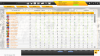
The story of Carlsberg's renewals is pretty clear. Those who were previously on inexpensive contracts and underperformed those contracts, got raises. Elsewhere, there were solid cuts.
Matthias Skjelmose Jensen gets the biggest raise by far, up 67,000 from last year. His surprise top 5 in the TDF, and his stint in yellow, were huge for Carlsberg's top 5 in the PT standings. But that performance was going to need to be rewarded, and Carlsberg couldn't risk letting their crown jewel walk for free agency, so he'll make 277,000 this year. The team hopes that with what they plan to invest in him this offseason, it will ultimately still be a good wage value for his skills.
Similar story for Jonas Gregaard, who put up over 500 points last year on a five-figure wage. He's turning 30 this year, and he wasn't going to miss out on his best chance for a payday. He'll make over 40,000 more in 2026, and the team will hope his 2025 wasn't entirely a fluke. Same thing for Alex Aranburu, who finally gets a pay raise justified by his results rather than his potential, to 340,000, after a great Vuelta.
On the other hand, Carlsberg ended up with some good deals too. Hugh Carthy came back down to earth last year after his 2024 GT heroics, and so did his salary, down almost 100,000. Frederik Rodenberg's inflated salary was drastically reduced as well. Even David Per took a paycut for the third straight year. He'll make 575,000 in 2026 after signing his famous 1,000,000 free agent deal in 2023.
Carlsberg also managed to save a lot on talents, whose free agency contracts had greatly overstated their current abilities. Simon Dalby is still making an insane 152,000, but it's a lot better than last year. Lund Andresen is actually on a really good contract for a secondary sprinter of his caliber now, and Askey is now all the way down to the minimum despite his skill increase, as is Wang.
Further down the line, the mid-range domestiques like Menten and Norsgaard were willing to take meaningful cuts, while the lower end domestiques fought for every last penny and wanted their depth contributions rewarded. Of course, Skivild's increase is due to his development, but for Krigbaum, it was another year of feisty negotiations. The team decided not to repeat his chaotic trip to free agency from a couple of years ago and just meet him in the middle, as he is too useful across multiple terrains.
All told, that leaves Carlsberg with 24 riders and € 379,000 in cap space to work with. They have several level 3 riders who could find loans elsewhere if desired, but don't necessarily need to. The loss of AKA as a co-lead sprinter is palpable for the scoring outlook, but no other significant contributors have declined or been released. This offseason could be a chance to add a piece or two and run it back, or it could be a time to cash in on some assets and retool.
But let's not get ahead of ourselves. First, let's see what team manager baseballlover312 had to see about the renewals.
"There are obviously a few pretty tough numbers for us coming out of renewals, but ultimately, what can you do? These are our guys. They took us to top 5 in the PT from nothing. We didn't meet anyone's demands and still found everyone somewhere in the middle, but for some guys, it was always going to take more than we hoped after the results they put up last year. For the rest, we feel like we got fair deals that will create space for what we're trying to do next. Our squad is largely intact from last year, and while we can't expect to repeat that top 5, we're hoping that with a few additions, we should be pretty safe from relegation. But easier said than done.
Oh, and I'll talk about AKA later. I can't really bring that one to words yet."
We'll be eager to see what Carlsberg are trying to do next when we provide our yearly availability projections. Stay tuned!


 Asbjorn Kragh Andersen has not been renewed. We will have much more on him once his situation for next year is finalized, but for now, it's safe to say this is a huge loss. AKA was the last remaining rider from Carlsberg's original 2014 team, and he capped off his team career with two stage wins in the Vuelta a Espana last year. He has given this team everything at every level, but he has nothing left to give.
 Michael Gogl and
  Irakli Bablidze, and stagiaire
  Magnus Waehre, were also released.
 David
David Hugh
Hugh Alex
Alex Lukas
Lukas Milan
Milan Gyasi
Gyasi Hugo
Hugo